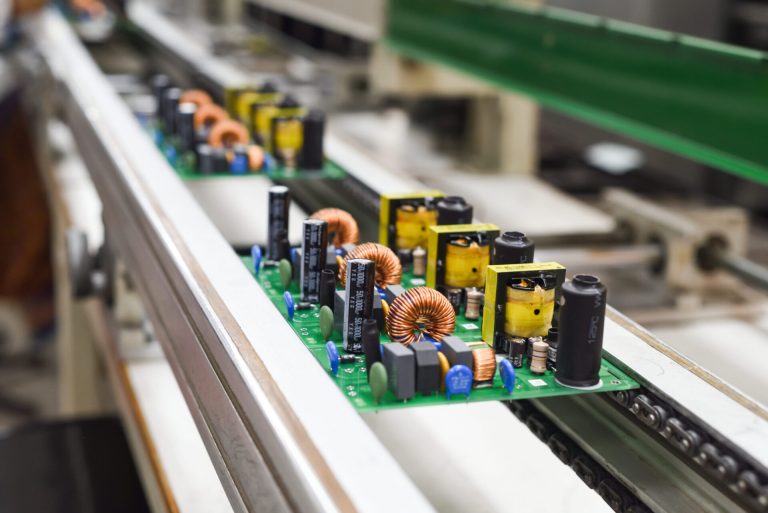
Functional Safety Certification
Obtain SIL (Safety Integrity Level) certification for E/E/PE components and systems compliant with the IEC 61508 standard Parts 1-7 through an efficient process guided by our team of specialists.

SIL Certification Process (Safety Integrity Level)
The SIL certification is based on a three-phase evaluation process (Functional Safety Assessment, FSA), which consists of analyzing the adequacy of the functional safety achieved by the equipment in relation to the clauses established by the IEC 61508 standards.


Detailed review of hardware and software design
We examine the product alongside your designers
Review of the development of the Functional Safety Management System
We verify the applicability of a management system to meet standard requirements

Audit on quality constraints
We analyze the implementation of IEC 61508 requirements in the quality management system
The SIL certificate is issued following equipment testing and the successful completion of all work phases.
The certification scheme, the Certification Agreement, and further information regarding the certificates issued by BYHON are available upon request by filling out our contact form under the "Documentation Request" section and specifying the type of document required.
Make the right choice. Obtain an excellence certification quickly.
SIL Certification
Watch the video explaining the foundations of functional safety and certification.
Steps in the SIL certification process
The detailed analysis of hardware and software design is based on relevant product design documentation (detailed hardware schematics, device data sheet, software code, etc.). During the hardware review, BYHON auditors study the product design to identify safety-relevant subsystems and components and define their functional architecture (presence of any redundant elements.
If gaps are identified during the design review with respect to the requirements of IEC 61508, they are documented through an analysis (GAP Analysis), in which the indications for the correction of these gaps in terms of design, documentation, etc. are reported.
FMEDA analysis (analysis of the effects and diagnostics of product failure modes) is based on a systematic analysis and breakdown of the product into its safety-relevant components, in order to identify the failure rates (safe/dangerous and detected/undetected) and potential failure modes of each component, analyzing them and classifying them according to their effects on the expected safety function of the product. The result of FMEDA analysis is an estimation of product reliability and diagnostic capability through quantification and distribution of failure rates.
The systematic capability provides a quantitative estimate of the robustness of the system with respect to systematic failures resulting from project management, documentation quality, control requirements, structured design, etc., managed through all phases of the system life cycle, in order to avoid systematic failure.
BYHON supervises the functional safety validation tests performed at the customer’s premises following the detailed protocol in the FS Test Procedure developed by BYHON and provided to the manufacturer. The objective is to demonstrate that the product meets the specifications for the general requirements of the safety functions and the general integrity requirements.
The Functional Safety Assessment (FSA) report is included in the SIL Certificate and contains the results of the assessment according to IEC 61508 requirements, together with the results of each step of the certification process.
The SIL certificate confirms compliance with IEC 61508 requirements and contains references to the FSA report and safety manual of the article.
The functional safety label (FS) accompanied by the unique identification code (ID) of the product is the label that must be affixed on the product to allow the identification and tracking of SIL certified items.
In this phase, BYHON analyses the relevant documentation for the implementation of the customer’s functional safety management system (FSMS) as policies and procedures that specify the organizational policy and strategy to achieve functional safety.
During this phase the presence of a quality management system is verified to ensure the manufacturer’s ability to maintain functional safety certification in all products manufactured with the validity of the certificate. The quality constraint audit carried out by BYHON focuses on the review of all relevant quality documents and procedures, production and test documentation relevant to effective functional safety management.
Certified Clients


Related articles